
Magnification equipment on the crime scene
Forensic expertise area: Crime scene investigation
Short description
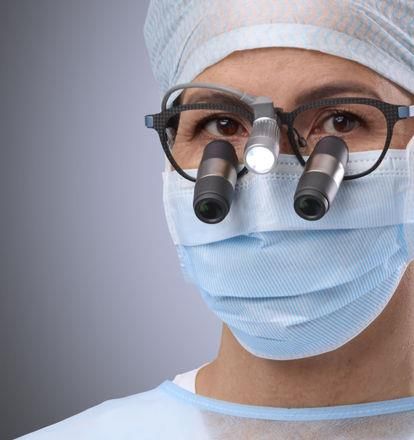
For the prevention of contamination and the saving of time during an investigation, it might be preferable to sample traces in certain areas of interest at the crime scene instead of sending the evidence to the lab. To achieve a similar level of quality while avoiding evidence manipulation which might lead to contamination, it might be worthwhile to make use of portable, magnifying equipment at the crime scene. Such equipment is common in various fields and while the NFI has previously applied it in a crime scene van, no research into the quality differences between crime scene and laboratory seems to have been performed. To start this research, a comprehensive overview of portable, magnifying equipment on the crime scene and the perceived effectivity thereof would be very beneficial.
References
1) R. Bracker et al., “Efficacy of USB microscopes for imaging forensic materials”, Forensic Science International, vol. 304, 109961, 2019.
2) K.-W. Liao et al., “Portable dielectric tunable forensic lens design for jadeite analysis”, International Conference on Optical MEMS and Nanophotonics, Singapore, pp. 1-2, 2016.
3) J. Mamoun, “Use of high-magnification loupes or surgical operating microscope when performing prophylaxes, scaling or root planing procedures”, The New York State Dental Journal, vol. 79, no. 5, pp. 48-52, 2013.
Required/Recommended skills and expertise
- Optics
Information
Institute/ Company: Politieacademie (Police Academy)
Department: Forensic Investigation
Supervisor: Xander de Wilde
Uva Examiner: Maurice Aalders
Uva Coordinator: Arian van Asten/ Yorike Hartman
Date of publication: December 8, 2025