
Fracture pattern characterisation in human bone trauma
Forensic expertise area: Forensic anthropology
Short Description
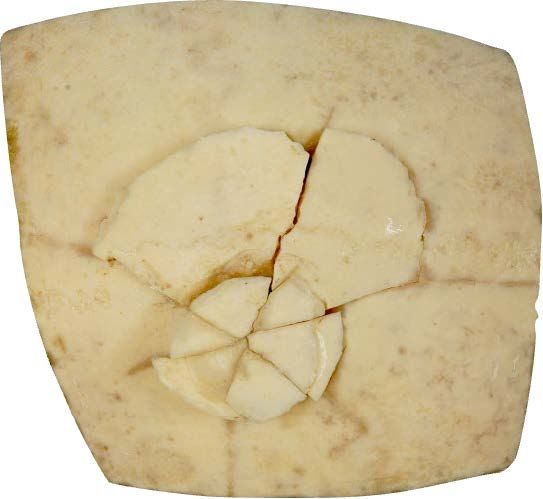
In previous studies, we characterized the fracture patterns and principal cortical features typically associated with blunt force and gunshot trauma (Scheirs et al., 2017, 2018, 2019; Ribeiro et al., 2020; Schwab et al., 2024, 2025). These traits have been described macroscopically, but without an in-depth analysis of their morphological and structural properties or their underlying mechanical implications. In forensic anthropology, the ability to determine trauma etiology from small, isolated bone fragments is essential. Such fragments often represent the only recoverable evidence in forensic and humanitarian contexts, and improving their diagnostic resolution could greatly enhance case interpretation.
This project proposes moving beyond gross morphological recognition of cortical traits towards determining whether their microstructural features can be diagnostic of a specific trauma mechanism, and whether they reflect the biomechanical processes involved in fracture formation. To address this, we will apply a fractographic approach—a methodology widely used in materials science to investigate fracture initiation, propagation, and surface morphology, but rarely applied to human bone analysis. By examining fracture surfaces at micro- and meso-scales, fractography enables the identification of subtle features linked to the energy, directionality, and mode of fracture, providing a higher-resolution view of trauma signatures.
The study will analyze bone specimens from the IMLCFC collection, including both autopsy-derived cases and experimentally fractured samples with well-documented trauma histories (Scheirs et al., 2017, 2018, 2019; Ribeiro et al., 2020; Schwab et al., 2024, 2025). Analysis will focus on previously reported cortical traits and their adjacent surfaces, using macroscopic inspection, stereomicroscopy, and digital image analysis in ImageJ/Fiji. This will include quantifying directionality, surface topography, and microrelief complexity. The proposed workflow is cost-effective, reproducible, and designed to generate morphometric descriptors with potential forensic applicability.
Required/ Recommended expertise
The ideal candidate would have training in biological / biomedical science, ideally bioimaging, and demonstrate interest or experience in digital morphometrics, bone analysis, and image-based research techniques.
References
Fracture patterns
Scheirs S, Malgosa A, Sanchez-Molina D, Ortega-Sánchez M, Velázquez-Ameijide J, Arregui-Dalmases C, Medallo-Muñiz J, Galtés I. New insights in the analysis of blunt force trauma in human bones. Int J Legal Med. 2017 May;131(3):867-875
Scheirs S, Langenhorst W, Malgosa A, Ortega-Sánchez M, McGlynn H, Santos C, Jordana X, Rodriguez-Baeza A, Galtés I. 2018. Perimortem fracture pattern in ribs by blunt force trauma. Int J Legal Med. 2018 Jul;132(4):1205-1213. doi: 10.1007/s00414-018-1806-8
Scheirs S, Hevink B, Ortega-Sánchez M, Jordana X, McGlynn H, Rodriguez A, Malgosa A, Galtés I. Intra vitam trauma pattern: changing the paradigm of forensic anthropology? Int J Legal Med. 2019 Mar;133(2):661-668. doi: 10.1007/s00414-018-1958-6.
Ribeiro P, Jordana X, Scheirs S , Ortega-Sánchez M, Rodriguez-Baeza A, McGlynn H, Galtés I. Distinction between perimortem and postmortem fractures in human cranial bone. 2020 Int J Legal Med Sep;134(5):1765-1774. doi: 10.1007/s00414-020-02356-3.
Schwab N, Jordana X, Monreal J, Garrido X, Soler J, Vega M, Brillas P, Galtés I. 2024. Ballistic long bone fracture pattern: an experimental study. International Journal of Legal Medicine https://doi.org/10.1007/s00414-024-03191-6
Schwab N, Jost D, Jordana X, Monreal J, Garrido X, Brillas P, Galtés I. Fracture patterns in diaphyseal gunshot trauma: role of the bullet's impact point and angle. Int J Legal Med. 2025 Apr 7. doi: 10.1007/s00414-025-03488-0. Epub ahead of print. PMID: 40192773.
Forensic fractography
Angi M. Christensen, Mariyam I. Isa, Michael A. Smith, Joseph T. Hefner, Hugh E. Berryman, Ian S. Saginor, & Jodi B. Webb. (2022). A Guide to Forensic Fractography of Bone (1.0). Zenodo. https://doi.org/10.5281/zenodo.6013748
Angi M. Christensen et al., Forensic Fractography of Bone Fracture Origins from Impacts, and an Improved Understanding of the Failure Mechanism Involved in Beveling Forensic Anthropology, Volume 4, Number 1, July 2021, pp. 57-69 DOI:10.5744/fa.2020.0041. https://dspace.lib.cranfield.ac.uk/server/api/core/bitstreams/00f3c855-8afe-47bb-a86e-ecc8e0100e54/content
Skinner J, Langley N, Joseph M, Herrick J, Brown R, Waletzki B, Goguen P, Shyamsunder L, Rajan S. Do bone elasticity and postmortem interval affect forensic fractographic analyses? J Forensic Sci. 2023 May;68(3):757-767. doi: 10.1111/1556-4029.15237. Epub 2023 Apr 14. PMID: 37057637.
Isa MI, Fenton TW, Antonelli LS, Vaughan PE, Wei F. Investigating reverse butterfly fractures: An experimental approach and application of fractography. Forensic Sci Int. 2021 Aug;325:110899. doi: 10.1016/j.forsciint.2021.110899. Epub 2021 Jul 5. PMID: 34247140.
Information
Institute / Company: Catalonian Institute of Legal Medicine and Forensic Science (IMLCFC)
Department: Forensic Pathology Service
City: Barcelona, Spain
Supervisor: Ignasi Galtés
UVA Examiner: Roelof-Jan Oostra
UVA Coordinator: Arian van Asten & Yorike Hartman
Date of publication: September 5, 2025