
Source comparison of drugs/explosives using isotope ratio nuclear magnetic resonance (NMR)
Forensic expertise area: Forensic Chemistry, Illicit Drug Analysis, Explosives
Short description
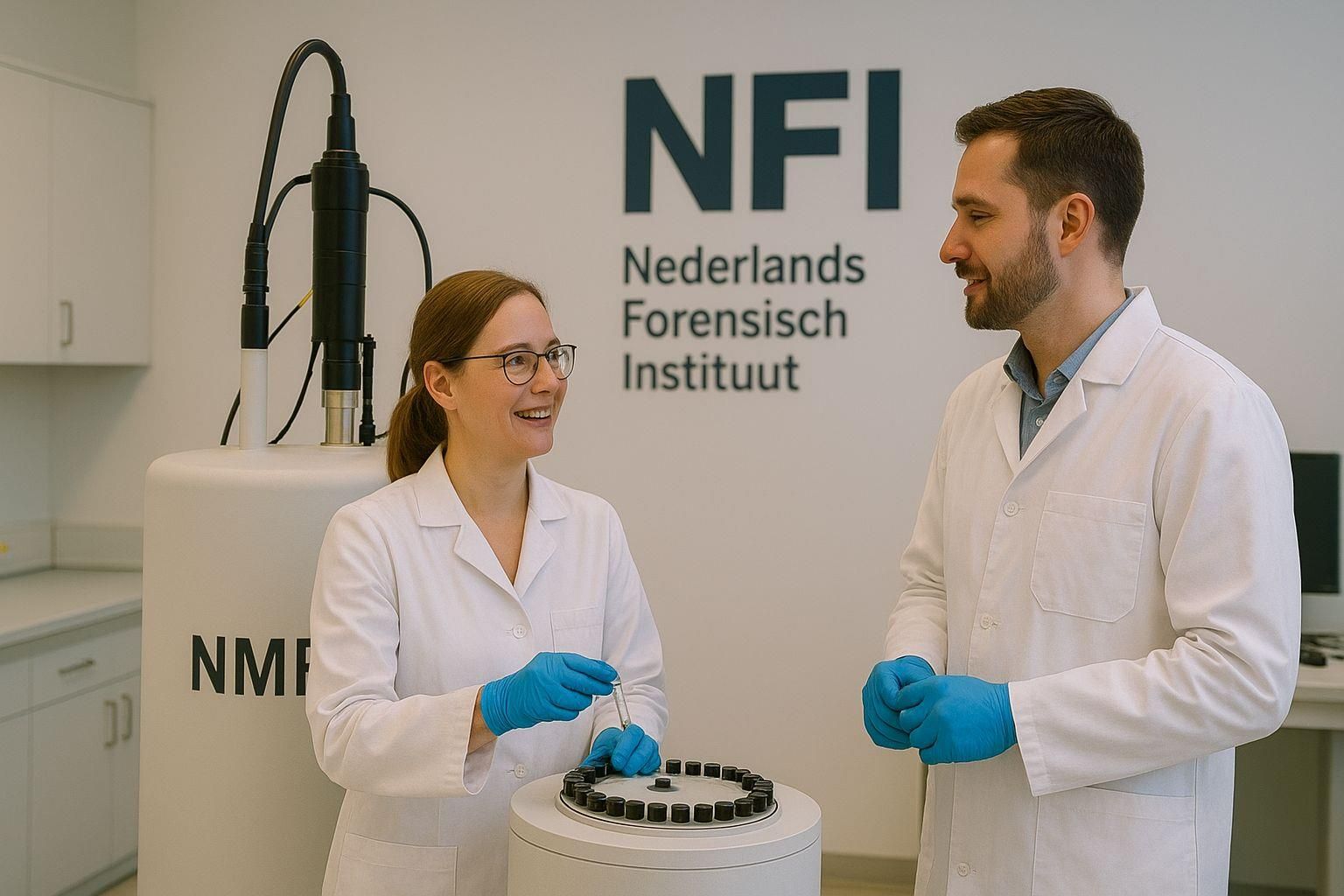
Traditional techniques for forensic source comparison, such as isotope-ratio mass spectrometry (IR-MS), are often effective but require specialized equipment, are labour-intensive, and can lead to false positives due to the use of bulk isotope ratios. NMR has shown that more information can be obtained by analyzing isotopic profiles at the atomic level instead of just bulk values. However, the application of this method in the forensic field has not been researched extensively, leaving important forensic questions unanswered. This research project aims to address some of these outstanding questions. It examines the influence of different synthesis routes on isotopic profiles, the effect of various precursors on the final product, and the discriminative power of the method in a forensic context. During the research, NMR will be primarily used, supplemented with techniques such as GC/LC-(HR)MS, organic synthesis, and IR-MS where relevant.
See more info: https://www.forensischinstituut.nl/over-het-nfi/werken-bij-het-nfi/stage-lopen-bij-het-nfi/cfs-stages/stageproject-isotoop-ratio-nmr
Closing date vacancy is September 29, 2025.
Required/ Recommended expertise
- NMR hands on experience (required)
- organic synthesis (recommended)
- data analysis (recommended)
References
1) Forensic application of position-specific isotopic analysis of trinitrotoluene (TNT) by NMR to determine 13C and 15N intramolecular isotopic profiles ; Valentin Joubert
2) Full Spectrum Isotopic 13C NMR Using Polarization Transfer for Position-Specific Isotope Analysis ; Valentin Joubert
Information
Institute / Company: Nederlands Forensisch Instituut (NFI)
Supervisor: Lex Jelier
UVA Examiner: Arian van Asten
UVA Coordinator: Arian van Asten & Yorike Hartman
Date of publication: September 5, 2025