
Shedding light on biological material on the skin
Forensic expertise area: Forensic biology
Short description
Since the late 1990s, we've known that touching objects deposits detectable amounts of biological material, such as DNA. We also know that some individuals tend to deposit more material than others, a phenomenon known as 'individual shedding propensity (ISP)' or 'shedder status'. This phenomenon has a major influence on forensic research and casework, and particularly on DNA activity level reporting.
Despite significant research efforts dedicated to ISP, many factors surrounding it remain elusive. One of these factors is the presence of biological material on the skin. For any material to be deposited onto a surface, it first has to 'accumulate' on the skin. We'd like to know if this accumulation differs among individuals and is therefore part of ISP.
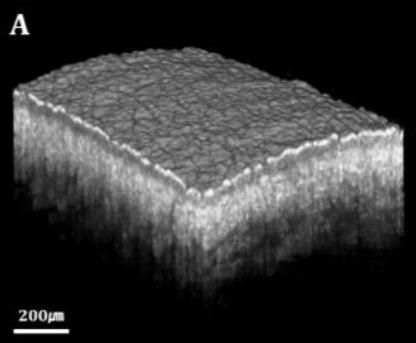
To investigate this, we want to measure the amount of biological material on the skin without actually sampling it. Therefore, we are looking for a suitable method to non-invasively detect and measure the accumulation of biological material on human skin.
For this research, we are looking for a motivated student who wants to delve into this topic!
References
1) Koch, D., Gosch, A., & Courts, C. (2025). “Shedding the status”—a meta-analysis on the individual propensity to shed skin material in the context of forensic trace analysis. International Journal of Legal Medicine, 139, 459–471. https://doi.org/10.1007/s00414-025-03408-2
2) Askaruly, S., Ahn, Y., Kim, H., Vavilin, A., Ban, S., Kim, P. U., Kim, S., Lee, H., & Jung, W. (2019). Quantitative Evaluation of Skin Surface Roughness Using Optical Coherence Tomography In Vivo. IEEE Journal of Selected Topics in Quantum Electronics, 25(1), 1–8. https://doi.org/10.1109/JSTQE.2018.2873489
3) Xu, J., Fang, Y., & Chen, J. (2021). Wearable Biosensors for Non-Invasive Sweat Diagnostics. Biosensors, 11(8), 245. https://doi.org/10.3390/bios11080245
Required/recommended skills and expertise
- Affinity with (forensic) biology
- Interest in ‘shedding’/ISP and its implications
- Interest in non-invasive biological methods such as tomography and biosensors
Information
Institute/ Company: Amsterdam University of Applied Sciences (HvA)
Department: Forensic Science
Country: The Netherlands
Supervisor: Jaimy Meeuwissen MSc
Uva Examiner: Maarten Blom
Uva Coordinator: Arian van Asten/ Yorike Hartman
Date of publication: September 11, 2025